Nuisance Midge Control and Information
Main_Content
Midges are small, non-biting insects commonly found near lakes, ponds, rivers, and wetlands. While a nuisance, the species of midges found along Maryland's brackish waters do not bite or transmit diseases. In 2017, an executive order established a pilot program in Baltimore County to help suppress midge populations along the Back River. The Maryland Department of Agriculture co-directs this effort in partnership with the Maryland Department of Natural Resources. Aerial spraying efforts have shown measurable success, with significantly reduced midge larvae densities recorded as recently as 2022. However, in 2025, midge populations surged again along the Back River. Residents report that these nuisance insects are emerging earlier in the season and appearing more frequently, with activity now expanding into additional counties. If you experience excessive midge swarms, please report them through Midge Reporter to help identify the most affected areas so we can prioritize where treatment is needed.
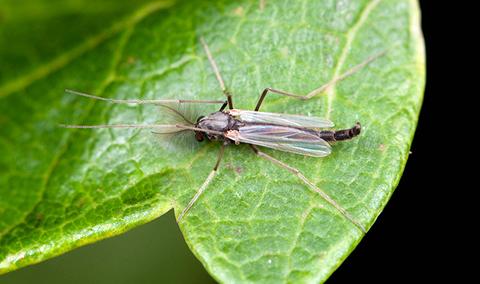
Chironomid midge- Matt Bertone, NC State
What Are Midges?
Non-biting midge flies, also known as chironomids, are commonly found in both inland and coastal natural and man-made bodies of water. They are often referred to as “blind mosquitoes” because they resemble mosquitoes but do not bite. Another nickname, “fuzzy bills,” comes from the male’s distinctive bushy antennae.
These aquatic insects tolerate a wide range of environmental conditions. Chironomid midges are found in fast-moving streams, slow rivers, stagnant ditches, lakes and ponds—especially those rich in decomposing organic matter. In urban and suburban areas, water bodies are often impacted by residential, recreational and agricultural activity. Runoff from these areas can introduce excess nutrients, such as nitrogen and phosphorus, into waterways. Consequently, biodiversity in these waters tends to decline, allowing species that tolerate areas of low dissolved oxygen levels to dominate. For these reasons, midges are used as an indicator of water quality.
